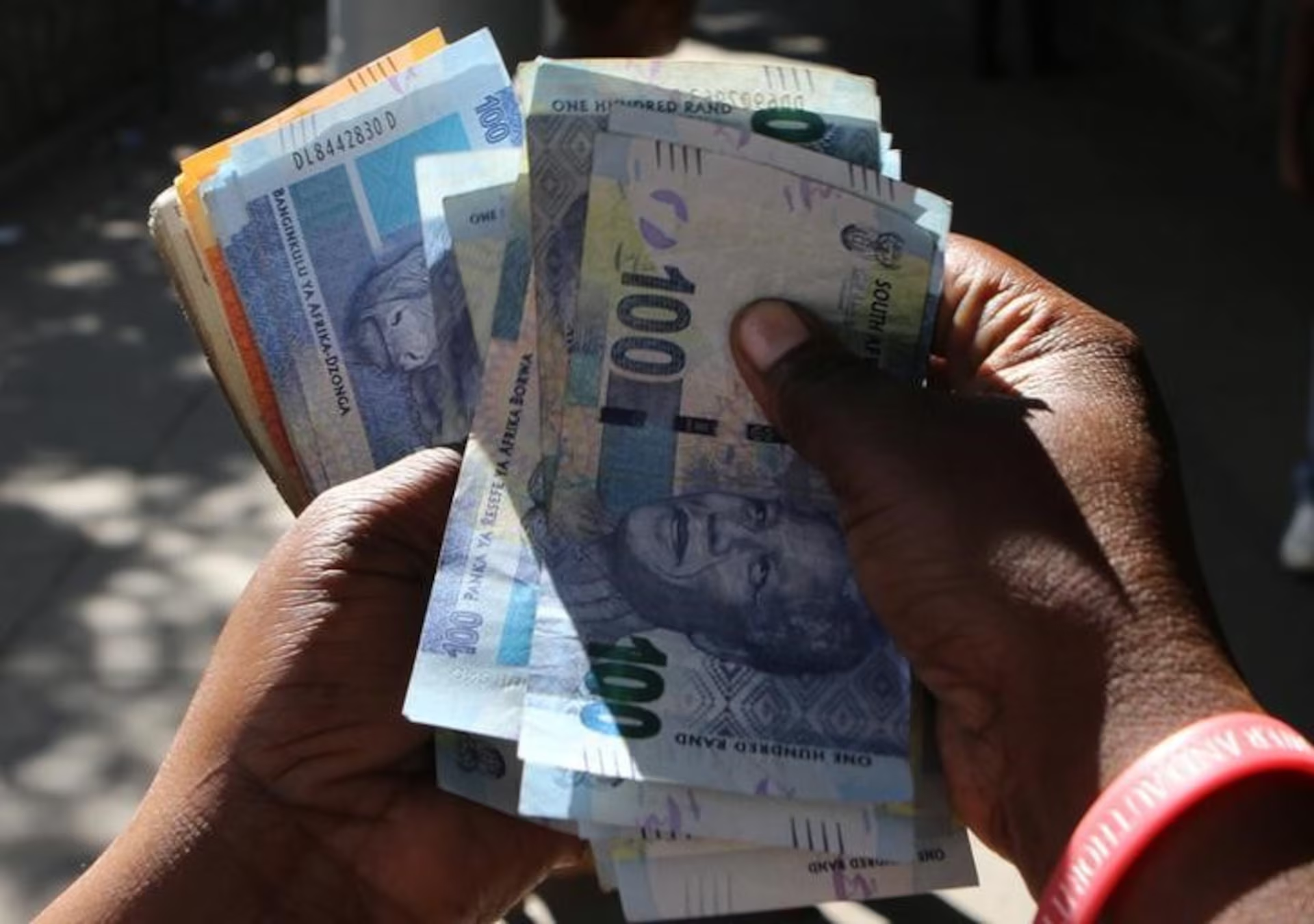

The South African rand strengthened on Friday as global investors reacted positively to renewed hopes of a possible peace agreement between the United States and Iran, while a weaker US dollar also gave emerging market currencies fresh support.
According to Reuters, early trading in Johannesburg showed the rand gaining ground against the dollar after several tense days in global financial markets that had been shaken by conflict in the Middle East. Traders appeared encouraged by signs that Washington and Tehran may still be moving toward a diplomatic resolution despite recent military exchanges between both countries.
The currency movement reflects how sensitive emerging economies like South Africa remain to international political developments. When geopolitical tensions rise, investors often move money into safer assets such as the US dollar. But when optimism returns, investors usually shift back toward higher-yielding markets, including South Africa.
On Friday morning, the dollar weakened broadly in global currency markets, helping the rand recover some recent losses. Analysts said the improved mood among investors was driven largely by expectations that the latest tensions between the US and Iran may not spiral into a wider regional conflict.
Reports earlier in the week suggested both countries were considering steps toward a temporary peace arrangement. Although there were renewed military strikes on Thursday, officials from both sides later signalled that they were not seeking a major escalation. That helped calm financial markets and pushed investors back toward riskier assets.
The rand, which is widely seen as one of the most liquid emerging market currencies, often reacts sharply to shifts in global risk appetite. Traders across Africa, Europe and Asia closely watch the South African currency because it is frequently used as a broader indicator of investor sentiment toward developing economies.
Financial experts noted that oil prices also played an important role in Friday’s market direction. Crude prices had dropped earlier in the week after reports suggested progress toward a possible US-Iran peace deal. Lower oil prices are generally positive for oil-importing countries like South Africa because they can reduce inflationary pressure and ease pressure on government finances.
At the same time, the weakening dollar gave additional support to emerging market currencies worldwide. Investors have recently become less aggressive in betting on continued dollar strength as expectations grow that the US Federal Reserve could eventually move toward lower interest rates if economic growth slows.
Fresh economic data from the United States also added to those expectations. Reports indicated that US job growth may have slowed in April after earlier gains linked to temporary factors began fading. Slower growth in the world’s largest economy can reduce pressure on the Federal Reserve to maintain high interest rates, which often weakens the dollar.
For South Africa, the stronger rand offers some short-term relief after weeks of volatility caused by global uncertainty and domestic economic concerns. Businesses that rely heavily on imported goods may benefit from a firmer currency, while consumers could see some moderation in fuel and imported product prices if the trend continues.
Still, economists warned that the situation remains fragile. The Middle East conflict is far from fully resolved, and any sudden deterioration could quickly reverse investor optimism. Currency traders said markets are likely to remain highly reactive to every new development involving the US and Iran.
Several analysts also pointed out that South Africa continues to face domestic economic pressures that could limit how much the rand strengthens in the coming weeks. Persistent electricity supply challenges, weak economic growth, unemployment concerns and investor uncertainty around government policy remain major issues weighing on the country’s long-term outlook.
Even so, Friday’s gains highlighted how quickly global sentiment can shift. Only days earlier, the rand had traded near a one-week low after renewed US-Iran hostilities increased fears of wider instability in the Gulf region. Investors had then rushed toward safer assets, weakening many emerging market currencies.
The turnaround in sentiment shows the extent to which global financial markets are being driven by geopolitical headlines rather than purely economic fundamentals.
Market watchers also observed that improved risk appetite boosted equities and currencies across several developing economies, not just South Africa. Gulf stock markets also posted gains earlier this week as hopes of a diplomatic breakthrough between Washington and Tehran encouraged investors.
Currency strategists said the rand’s performance in the coming days will depend heavily on three major factors: developments in Middle East diplomacy, movements in global oil prices and upcoming US economic data.
If tensions continue easing and oil prices remain stable, the rand could maintain its recent momentum. However, another sharp escalation in conflict could quickly trigger renewed pressure on emerging market assets.
Why Global Politics Matters So Much to the Rand
The South African rand is regarded as one of the most globally exposed currencies among emerging markets. Unlike some African currencies that trade within tighter government controls, the rand moves freely according to international investor demand.
That means events taking place thousands of kilometres away, from Washington to Tehran to Beijing, can have an immediate effect on South African financial markets.
When investors become nervous about geopolitical risks, they often sell emerging market assets and move funds into safer investments such as US Treasury bonds or the dollar itself. The rand usually weakens during those periods because international investors reduce exposure to riskier economies.
On the other hand, when fears begin to ease, investors typically return to higher-yielding markets in search of stronger returns. That tends to strengthen the rand.
The currency has experienced major swings over the years due to both domestic and global events, including international financial crises, commodity price shocks, political instability and changes in US monetary policy.
Because South Africa depends heavily on foreign investment inflows, confidence among global investors plays an enormous role in determining the rand’s strength.
Markets Watch Oil Prices and the US Dollar Closely
Oil prices remain one of the biggest external influences on South Africa’s economy. Since the country imports most of its fuel needs, rising oil prices usually increase transport and production costs across the economy.
That can push inflation higher and create pressure on the South African Reserve Bank to maintain elevated interest rates.
This week, however, oil prices fell sharply after reports suggested progress toward a possible peace arrangement between the US and Iran. Investors interpreted the development as a sign that global oil supply disruptions may become less severe than previously feared.
At the same time, the US dollar weakened against several global currencies as traders reassessed the likelihood of future Federal Reserve rate decisions. A softer dollar often benefits emerging market currencies because it encourages international investors to seek better returns outside the United States.
Analysts say these two forces combined to give the rand a strong boost on Friday.
Still, they cautioned that currency markets remain extremely sensitive to sudden news developments. Investors are expected to continue monitoring diplomatic talks, military activity in the Gulf and fresh economic data from the US in the days ahead.
Back Story: How the Rand Became a Global Risk Indicator
The South African rand was introduced in 1961 and has since evolved into one of the most actively traded emerging market currencies in the world. Over decades, it has become closely tied to global investor sentiment because South Africa maintains deep connections with international commodity, financial and trade markets.
Historically, the rand has reacted strongly to political uncertainty, commodity price swings and major international events. During periods of global stability, investors often move money into South African markets seeking higher returns. But during times of crisis, the currency can weaken rapidly as investors pull funds back into safer economies.
In recent years, movements in the rand have increasingly reflected broader concerns around energy prices, US monetary policy and geopolitical tensions. That pattern has become especially visible during the latest Middle East conflict involving the US and Iran.
The latest gains suggest that investors are cautiously hopeful that diplomacy may still prevent a wider regional war, even though uncertainty remains high across global markets.
Join Our Social Media Channels:
WhatsApp: NaijaEyes
Facebook: NaijaEyes
Twitter: NaijaEyes
Instagram: NaijaEyes
TikTok: NaijaEyes