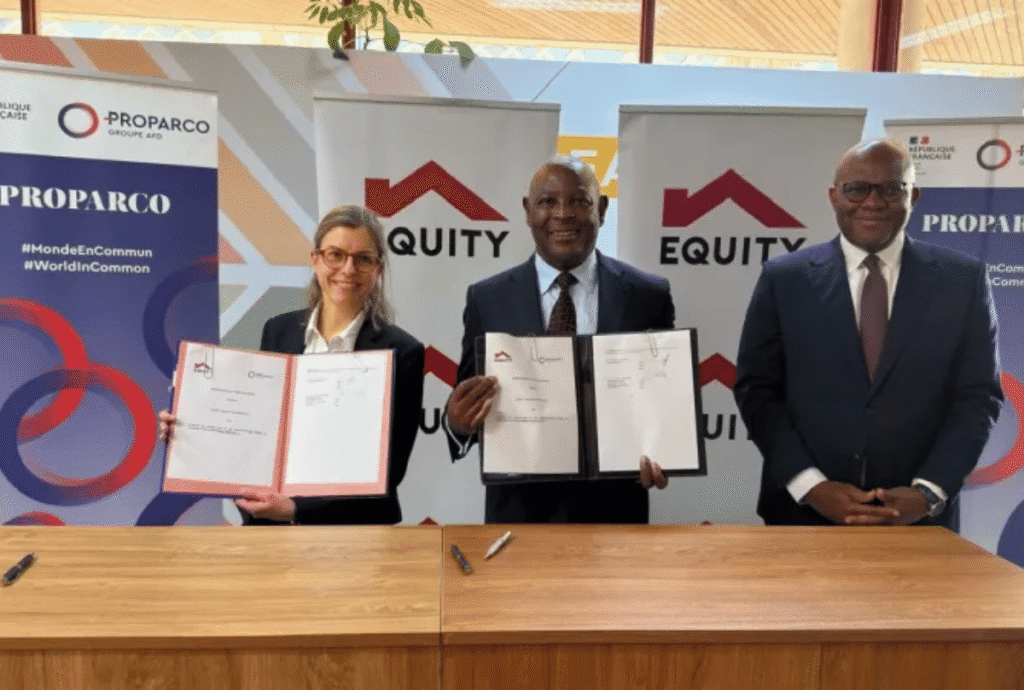
Small businesses across Africa may soon gain stronger access to funding following a fresh financing partnership between Proparco and Equity Group Holdings aimed at supporting entrepreneurs, women-led enterprises and climate-focused projects on the continent.
The agreement, announced on Tuesday, introduces a new $70 million financing initiative designed to support small and medium-sized enterprises across several African markets. The partnership reflects growing efforts by development finance institutions and commercial banks to close Africa’s long-standing SME funding gap, especially at a time when businesses across the continent are battling inflation, currency pressure and tighter access to credit.
According to details released by both institutions, the deal will be executed through EquityBCDC, the Democratic Republic of Congo subsidiary of Equity Group, with Proparco arranging the syndicated financing alongside other development finance partners. Out of the total facility, Proparco itself is expected to contribute $25 million directly.
The financing package will target SMEs and micro businesses operating in critical sectors of African economies, including agriculture, trade, climate-related investments and regional commerce. The initiative also places strong attention on financial inclusion for women entrepreneurs, with 30 per cent of the total funding reserved for women-led businesses under the global 2X Challenge framework.
For many African entrepreneurs, access to affordable credit remains one of the biggest obstacles to expansion. Across several countries, SMEs contribute significantly to employment and local economic activity, yet many still struggle to secure formal financing from banks because of collateral demands, high interest rates and limited credit history.
Industry analysts say the latest partnership signals renewed confidence in Africa’s private sector despite global economic uncertainty and slower venture capital activity in some markets.
Recent funding data shows African startups and businesses raised hundreds of millions of dollars during the first quarter of 2026, with fintech, climate finance and infrastructure-related ventures attracting the strongest investor interest.
Executives from both organisations described the agreement as more than a routine financing arrangement, presenting it instead as part of a broader mission to support sustainable development and long-term economic growth across Africa.
Chief Executive Officer of Proparco, Françoise Lombard, said the agreement reinforces the institution’s commitment to supporting African businesses capable of creating jobs and delivering social impact.
Equity Group also highlighted the importance of the partnership in expanding financial support for underserved enterprises that often struggle to attract commercial investment despite their role in driving local economies.
The agreement identifies five strategic areas both institutions intend to focus on together. These include SME financing, climate finance, agricultural value chains, trade finance and broader financial sector development initiatives.
Observers say the emphasis on agriculture and regional trade is particularly important given Africa’s increasing focus on intra-African commerce under the African Continental Free Trade Area. Easier financing access could help smaller businesses participate more actively in cross-border trade and regional supply chains.
The climate finance component of the partnership also reflects a wider shift among global investors and development lenders toward sustainable financing in Africa. In recent months, several climate-focused investment vehicles targeting African startups and businesses have emerged as demand rises for renewable energy, sustainable agriculture and green infrastructure funding.
Development finance institutions have increasingly positioned themselves as critical players in helping African economies absorb shocks caused by inflation, debt pressure and global market volatility. Institutions like Proparco have expanded their investments across sectors ranging from banking and infrastructure to education and renewable energy.
For Equity Group, the latest collaboration strengthens its reputation as one of Africa’s most aggressive banking groups in SME financing. The bank has consistently expanded its footprint across East and Central Africa while building lending programmes focused on entrepreneurs, informal businesses and agricultural communities.
Financial experts believe partnerships like this may become more common as commercial lenders increasingly rely on development finance institutions to reduce risk exposure in emerging markets.
Syndicated facilities allow institutions such as Proparco to mobilise additional international capital while spreading financial risk among multiple partners. This structure also helps local banks provide larger financing packages to businesses that would otherwise struggle to secure substantial loans independently.
The Democratic Republic of Congo, where the first phase of the deal will be implemented through EquityBCDC, represents one of Africa’s largest untapped business markets despite persistent infrastructure and governance challenges. SMEs in the country continue to face severe financing shortages, limiting expansion opportunities for local enterprises.
Analysts note that stronger financial support for SMEs could have broader implications for employment creation and economic stability, particularly in countries with large youthful populations and rising unemployment levels.
Many development finance institutions now view SMEs as essential drivers of inclusive economic growth because small businesses often generate a significant share of jobs across emerging markets.
The women-focused component of the initiative is also drawing attention among development economists. Across Africa, women-owned businesses frequently face even greater barriers to financing than businesses led by men, despite evidence showing strong repayment performance among female entrepreneurs.
By dedicating part of the facility specifically to women-led businesses, the partnership aims to improve financial inclusion while supporting broader economic participation among female entrepreneurs.
The latest announcement comes amid increasing competition among African banks and international lenders to deepen their presence in SME financing. Financial institutions are under pressure to create lending models that reach underserved entrepreneurs without exposing banks to unsustainable credit risks.
Technology-driven lending systems, mobile money integration and alternative credit assessment methods are increasingly becoming part of the solution. Across Africa, digital lending and fintech platforms are gradually helping businesses access working capital faster than traditional banking systems allowed in previous years.
Still, experts warn that financing alone may not solve the challenges facing SMEs. Businesses also require stronger infrastructure, stable electricity, improved logistics and supportive regulatory environments to scale sustainably.
Despite these concerns, the Proparco and Equity Group partnership is being viewed as a positive signal for African entrepreneurship at a time when many small businesses are struggling with rising operational costs and limited investment flows.
With both organisations indicating plans for deeper collaboration beyond the initial transaction, the agreement may eventually open the door to additional financing programmes across multiple African countries.
Back Story: A Longstanding Relationship Built Around African Enterprise
The relationship between Proparco and Equity Group did not begin with this latest $70 million arrangement.
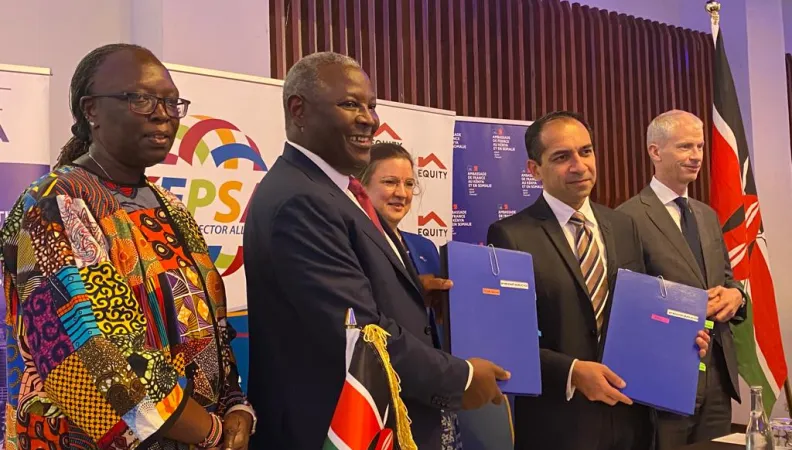
Both institutions have collaborated previously on projects focused on SME financing and sustainable development across Africa. In earlier partnerships, Proparco supported Equity Group initiatives targeting Kenyan small businesses and climate-related financing under broader French-backed investment programmes aimed at supporting African enterprises.
Over the years, Proparco has emerged as one of the most active development finance institutions operating across Africa, backing projects in banking, infrastructure, renewable energy, education and entrepreneurship.
Equity Group, on the other hand, has evolved from a Kenyan lender into one of Africa’s leading regional banking groups with operations spanning several countries, including Kenya, Uganda, Rwanda, Tanzania, South Sudan and the Democratic Republic of Congo.
Their continued collaboration reflects a growing trend where African commercial banks and international development financiers work together to tackle financing gaps affecting SMEs and underserved communities.
As African economies continue pushing for industrial growth, regional trade and climate resilience, partnerships between development lenders and local financial institutions are expected to play an even bigger role in shaping the continent’s economic future.
Join Our Social Media Channels:
WhatsApp: NaijaEyes
Facebook: NaijaEyes
Twitter: NaijaEyes
Instagram: NaijaEyes
TikTok: NaijaEyes