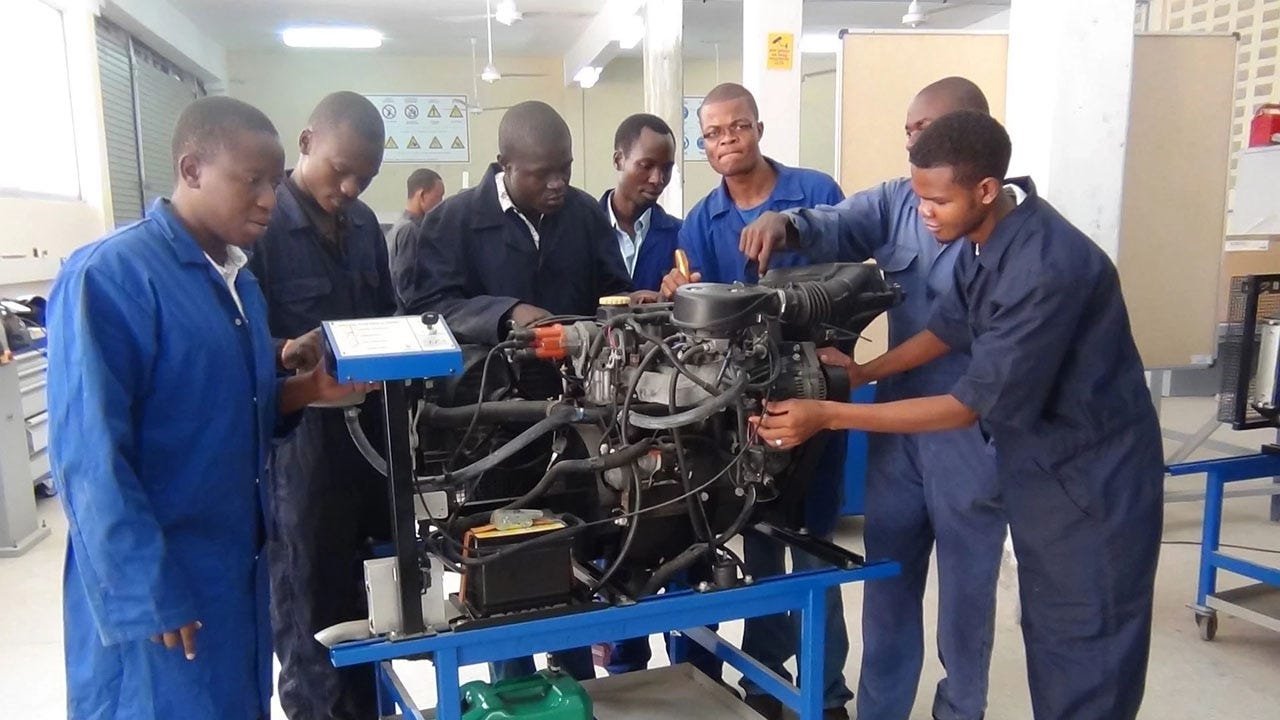

Nigeria’s technology industry is growing at a remarkable pace, but there is a silent shift happening beneath the headlines about billion-dollar startups and artificial intelligence. Increasingly, young Nigerians are discovering that the fastest route into tech may not come through a university degree alone. Instead, vocational training and technical education are emerging as practical, affordable, and career-driven alternatives for thousands of people eager to enter the digital economy.
Across cities like Lagos, Abuja, Port Harcourt, Ibadan, and Enugu, young people are enrolling in boot camps, technical institutes, apprenticeship programmes, and vocational hubs where the focus is less on theory and more on hands-on experience. From software development and cybersecurity to solar installation, UI design, cloud computing, and digital marketing, these programmes are creating a new generation of workers who are learning by doing.
For many Nigerians facing economic uncertainty, rising tuition fees, and unemployment, vocational education is no longer seen as a second choice. It is quickly becoming a direct pathway to opportunity.
The Federal Government has also intensified its investment in Technical and Vocational Education and Training, commonly known as TVET. Recent initiatives aim to equip millions of young Nigerians with practical skills that match current labour market demands. According to reports, thousands of training centres are now being developed nationwide as part of efforts to close the country’s growing skills gap.
This shift reflects a larger reality. Nigeria’s economy is changing faster than the traditional education system can keep up with. Employers are increasingly searching for people who can solve problems immediately rather than candidates who only possess certificates.

Why Employers Are Prioritising Skills Over Degrees
For years, university education was viewed as the safest route to success in Nigeria. Parents encouraged children to become lawyers, doctors, engineers, or bankers because those professions represented stability and respect. But the modern tech economy is rewriting those assumptions.
Many companies today care more about practical ability than academic titles. A software company hiring a frontend developer wants to see projects, portfolios, and coding skills. A digital marketing agency is more interested in campaign performance than a transcript. Cybersecurity firms want people who can detect threats and secure systems in real time.
This reality is one reason vocational tech training is attracting attention. These programmes are often shorter, more targeted, and heavily focused on practical work. Students spend less time memorising theory and more time building websites, analysing data, repairing devices, or learning cloud platforms.
Reports on Nigeria’s vocational education sector show that many employers now prefer candidates with demonstrable skills because they can contribute immediately in the workplace.
The flexibility of vocational learning is another major attraction. Unlike traditional degree programmes that may take four to five years, many technical courses can be completed within a few months. That speed matters in a country where many young people need income quickly.
It also matters in technology because the industry changes rapidly. New tools, platforms, and programming languages emerge constantly. Vocational institutions are often able to update their curriculum faster than conventional universities.
This practical advantage explains why coding academies, tech hubs, and digital bootcamps continue to expand across Nigeria. Young Nigerians are recognising that they can build employable skills without waiting years for graduation.
How Nigeria’s TVET Push Is Reshaping the Future of Tech Education
The renewed attention on vocational training is not happening by accident. Policymakers increasingly see technical education as essential for economic growth and youth employment.
The Federal Ministry of Education has introduced several TVET initiatives designed to train Nigerians in industry-relevant skills. These programmes include partnerships with private organisations, mentorship models, internships, and entrepreneurship support.
Government officials have repeatedly argued that Nigeria cannot rely solely on theoretical education if the country hopes to compete globally. The focus now is on building a workforce capable of functioning in manufacturing, renewable energy, construction, digital services, and emerging technologies.
One major development is the growing emphasis on apprenticeship-style learning. Under newer technical college reforms, students spend significantly more time in practical training environments than in classrooms.
This model mirrors successful systems used in countries such as Germany and China, where vocational education is deeply connected to industry.
Technology training is becoming one of the strongest components of this movement. Beyond traditional trades like welding and plumbing, Nigerian vocational institutions are now offering courses in web development, software engineering, robotics, animation, data analytics, artificial intelligence, and digital product design.
For many young people, these programmes represent something powerful: access.
A university degree can be expensive and competitive. Vocational programmes are often more affordable and accessible to people from different educational backgrounds. Some even provide stipends, startup support, or internship opportunities.
This accessibility could have a major long-term impact on Nigeria’s economy. The country has one of the world’s youngest populations, and millions of youths enter the labour market every year. Traditional white-collar jobs alone cannot absorb that population.
Practical digital skills, however, can create new possibilities in freelancing, entrepreneurship, remote work, and global outsourcing.

The Back Story Behind Nigeria’s Growing Vocational Revolution
Nigeria’s vocational awakening did not begin overnight. For decades, technical education carried a social stigma. Many families considered vocational schools inferior to universities, and students who attended technical colleges were often viewed as people who could not secure admission into higher institutions.
At the same time, the country’s education system became increasingly disconnected from labour market realities. Graduates frequently left school with strong theoretical knowledge but little practical experience. Employers complained about the cost of retraining new hires, while unemployment among graduates continued to rise.
The rise of the internet economy gradually changed public perception.
As tech startups expanded across Africa, stories began to emerge about young Nigerians who learned coding online, built apps from cybercafes, or launched careers through digital skills rather than university degrees. Tech hubs and innovation centres began appearing in Lagos, Abuja, and other cities, creating ecosystems where skills mattered more than formal titles.
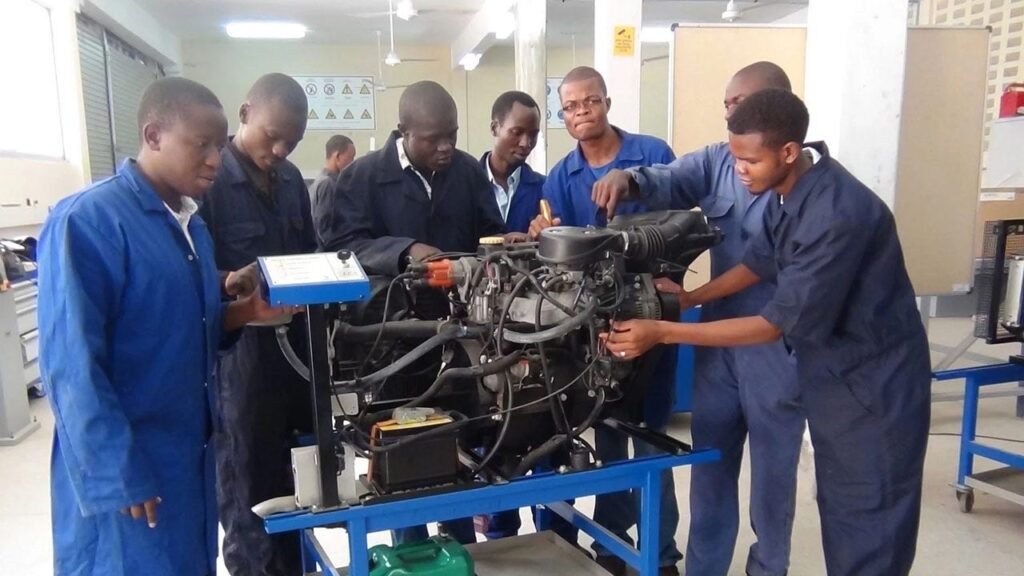
Global remote work also accelerated the trend. Nigerian youths realised they could work for companies abroad if they possessed the right digital abilities. Suddenly, vocational tech education no longer looked like a backup option. It looked like a shortcut to global opportunity.
Online conversations among Nigerians increasingly reflect this mindset. Many young people now see technology as one of the few industries where skill can create social mobility relatively quickly.
Still, challenges remain. Access to electricity, internet connectivity, equipment, and funding continues to affect many aspiring tech professionals. There are also concerns about oversaturation in certain tech fields and the need for stronger quality control among training providers.
Yet despite these obstacles, vocational technology training continues to gain momentum because it aligns closely with the realities of modern work.
Nigeria’s future workforce may look very different from previous generations. Instead of waiting years for formal employment, more young people are likely to build careers through specialised skills, freelance opportunities, startups, and digital entrepreneurship.
That transition could redefine education itself.
The conversation is no longer simply about earning degrees. It is increasingly about learning skills that solve real problems and generate income in a rapidly changing economy.
For thousands of Nigerians today, vocational training is not merely an educational option. It is becoming a strategy for survival, independence, and upward mobility in the digital age.
Join Our Social Media Channels:
WhatsApp: NaijaEyes
Facebook: NaijaEyes
Twitter: NaijaEyes
Instagram: NaijaEyes
TikTok: NaijaEyes