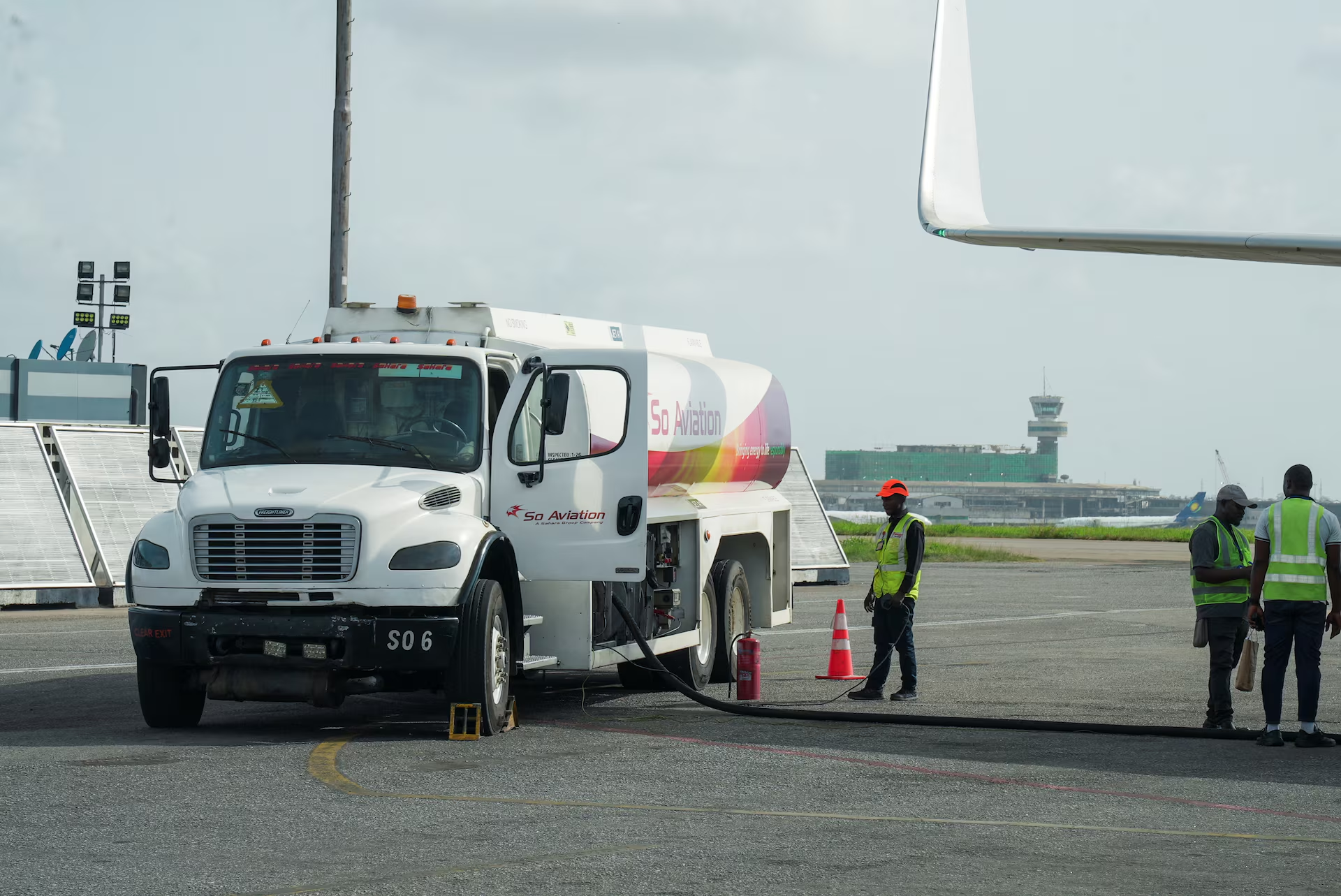

Nigeria has moved decisively to stabilise its aviation sector after weeks of tension, capping jet fuel prices and introducing credit support for airlines in a bid to prevent widespread flight disruptions. The intervention follows a sharp surge in aviation fuel costs that had pushed local carriers to the brink, threatening cancellations and higher fares for passengers across the country.
According to Reuters, the new directive, contained in a government document, sets price bands for aviation fuel in key hubs. In Lagos, prices are now fixed between about ₦1,760 and ₦1,988 per litre, while in Abuja they range from roughly ₦1,809 to ₦2,037 per litre. These figures are benchmarked against current market realities but are intended to prevent the kind of extreme volatility that has recently shaken the industry.
At the heart of the decision is a simple concern: keeping Nigeria’s air transport system running. In recent weeks, airline operators have warned that escalating fuel costs could force them to cut capacity or even suspend operations entirely. That threat is now being addressed through a combination of pricing controls, financial relief, and regulatory coordination.
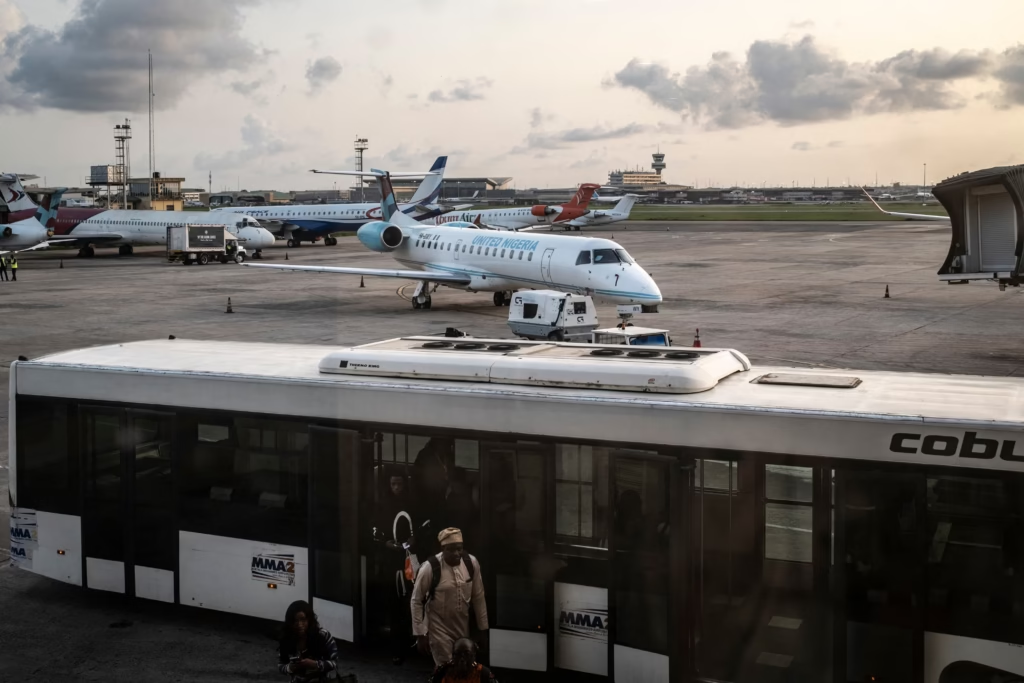
Government Steps In to Stabilise Aviation Sector
The Federal Government’s response comes after emergency engagements with airline operators, regulators, and fuel marketers. President Bola Tinubu had earlier approved a 30 percent relief on airlines’ outstanding debts to aviation agencies, while also mandating stakeholders to agree on a workable fuel pricing framework within 72 hours.
Beyond the price cap, authorities have introduced a 30-day credit facility for airlines purchasing jet fuel. This measure is expected to ease immediate cash flow pressures on operators, many of whom have struggled to balance rising operational costs with relatively weak passenger demand.
The Nigerian Midstream and Downstream Petroleum Regulatory Authority is also stepping in as a mediator between airlines and fuel suppliers, ensuring that disputes do not escalate into operational disruptions.
Industry insiders say this coordinated approach marks one of the most direct interventions in Nigeria’s deregulated fuel market in recent years. While the market technically remains open, the government is clearly signalling that aviation, as a strategic sector, cannot be left entirely to market forces during periods of extreme volatility.

Soaring Fuel Costs and Global Pressures
The crisis did not emerge in isolation. Jet fuel prices in Nigeria have been heavily influenced by global energy disruptions, particularly the ongoing 2026 Iran war fuel crisis, which has significantly tightened oil supply and driven up costs worldwide.
The conflict has disrupted key supply routes and contributed to a sharp rise in crude oil prices, with knock-on effects for aviation fuel. In many markets, jet fuel prices have more than doubled within a short period, forcing airlines globally to reconsider pricing, capacity, and operational strategies.
In Nigeria, the impact has been even more pronounced due to foreign exchange pressures and reliance on imported crude for refining. At one point, domestic airlines faced fuel prices approaching ₦3,300 per litre, nearly tripling within months and making operations increasingly unsustainable.
This surge triggered warnings from airline operators, who argued that without urgent intervention, they would have no choice but to halt flights. The ripple effect would have been severe, affecting business travel, tourism, cargo movement, and overall economic activity.
Dangote Refinery, Market Dynamics and Policy Adjustments
Nigeria’s refining landscape is also playing a critical role in the unfolding situation. The Dangote Refinery, which began full operations earlier in 2026, has increased domestic supply capacity but has not yet translated into significantly lower prices for local airlines.
Despite producing millions of litres of jet fuel daily, the refinery exports a substantial portion of its output to international markets where margins are more attractive. This dynamic has left local carriers competing for supply at prices influenced by global demand rather than domestic priorities.
To address this imbalance, a technical committee has proposed several policy options. These include direct sales of jet fuel from marketers to airlines, validation of distribution channels, and possible inclusion of aviation fuel in a naira-for-crude arrangement aimed at reducing foreign exchange exposure.
There are also ongoing discussions about pricing premiums and how domestic refiners can better support the local aviation industry without undermining their profitability.
What This Means for Airlines and Passengers
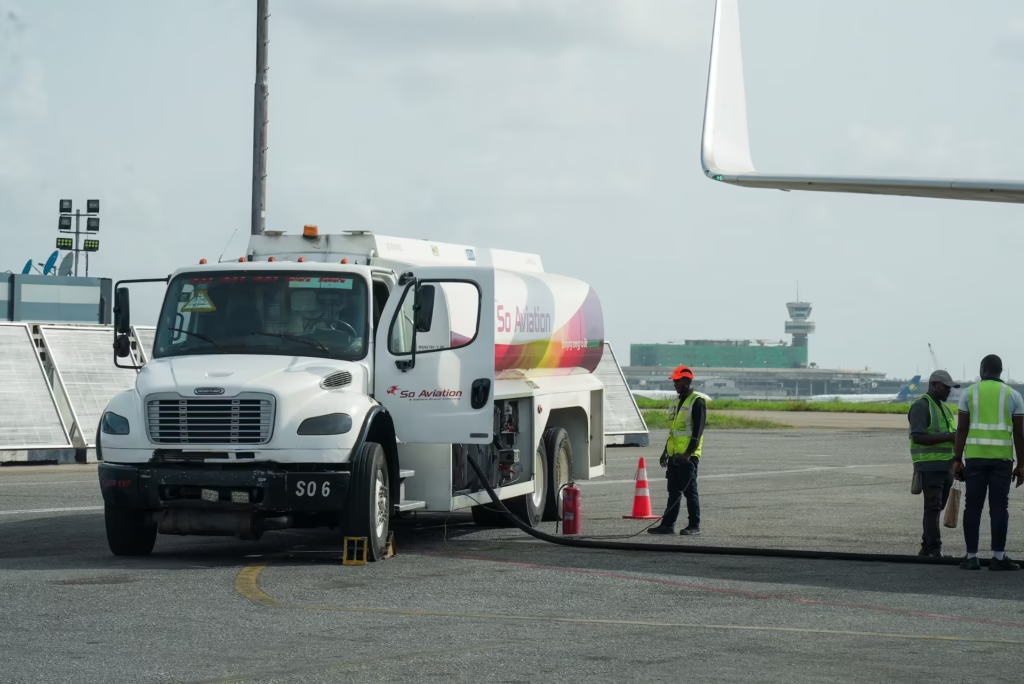
For airlines, the immediate outlook is one of cautious relief. The price cap provides a predictable cost structure, while the credit facility offers breathing space to manage short-term financial obligations. Together, these measures could help stabilise flight schedules and prevent sudden cancellations.
Passengers, on the other hand, may begin to see a gradual easing of fare pressures, although industry experts caution that ticket prices may not drop immediately. Airlines are still recovering from months of elevated costs and may need time to rebalance their pricing strategies.
In the broader context, the government’s intervention highlights the delicate balance between deregulation and strategic control. While Nigeria has embraced market-driven pricing in the petroleum sector, the aviation industry’s importance to national connectivity and economic activity makes it too critical to fail.
Looking ahead, much will depend on global oil market trends and how quickly domestic refining capacity can translate into real cost advantages for local operators. The current measures are a stopgap, but they also signal a willingness by authorities to act decisively when key sectors face existential threats.
If sustained and complemented by structural reforms, this intervention could mark a turning point for Nigeria’s aviation industry, helping it navigate one of its most challenging periods in recent history.
Join Our Social Media Channels:
WhatsApp: NaijaEyes
Facebook: NaijaEyes
Twitter: NaijaEyes
Instagram: NaijaEyes
TikTok: NaijaEyes