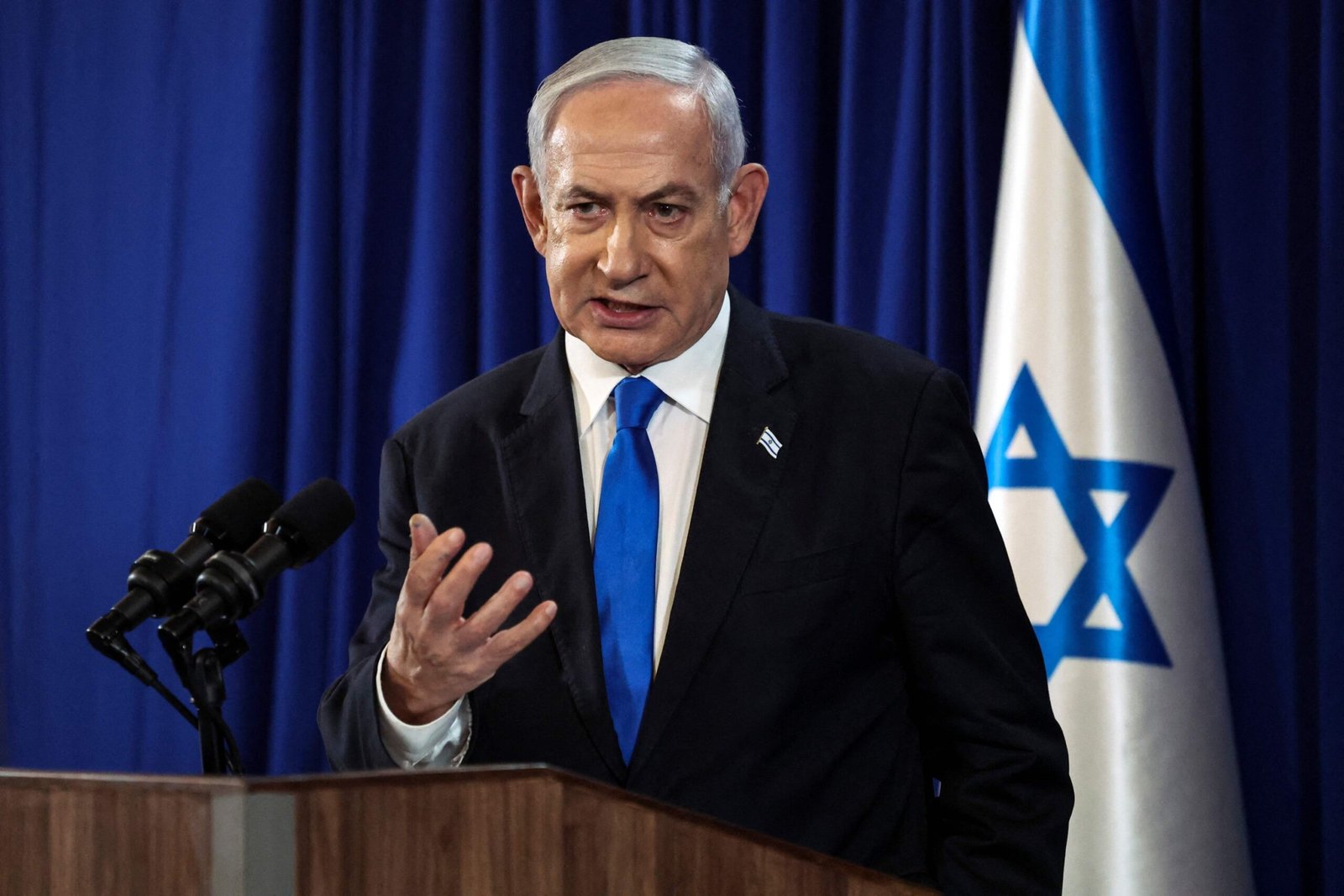

Iran’s Tasnim News Agency published a report on Monday promoting speculation that Prime Minister Benjamin Netanyahu may have been killed or wounded, reviving the kind of wartime rumor that has repeatedly spread online during the current Israel-Iran conflict.
There was no official confirmation of injuries or proof of a strike on Netanyahu in the Persian-language story. Rather, it compiled a number of circumstantial evidence, such as the lack of recent video footage of Netanyahu, reports in Hebrew-language media about increased security surrounding his residence, the cancellation of a purported visit by Jared Kushner and US special envoy Steve Witkoff, and a French transcript of a call between Netanyahu and President Emmanuel Macron that did not include the date of the exchange.
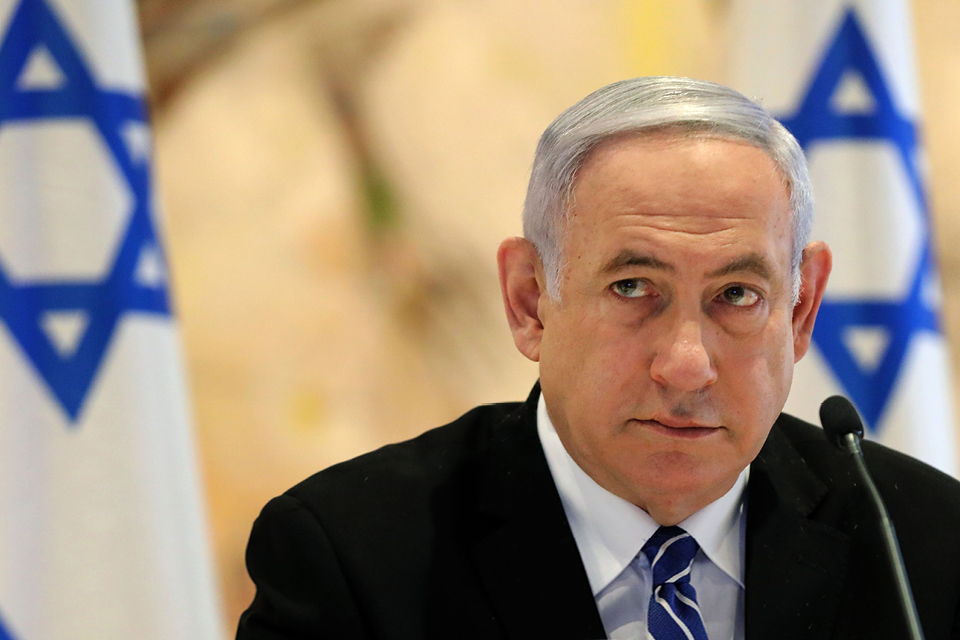
Tasnim’s allegation also relied on a secondhand account from former US intelligence officer Scott Ritter, which was reported by Russian media and claimed that Iran had bombed Netanyahu’s bunker and murdered his brother. Tasnim itself stated that there was no formal confirmation or denial of the rumours.
The article follows a well-known pattern in Iranian and pro-Iranian information warfare: actual public data parts are pieced together into a dramatic story and then disseminated as though they indicate a secret event. The US Treasury designates Tasnim as associated with Iran’s Islamic Revolutionary Guard Corps (IRGC), and the outlet is frequently described as being connected to or associated with the IRGC.
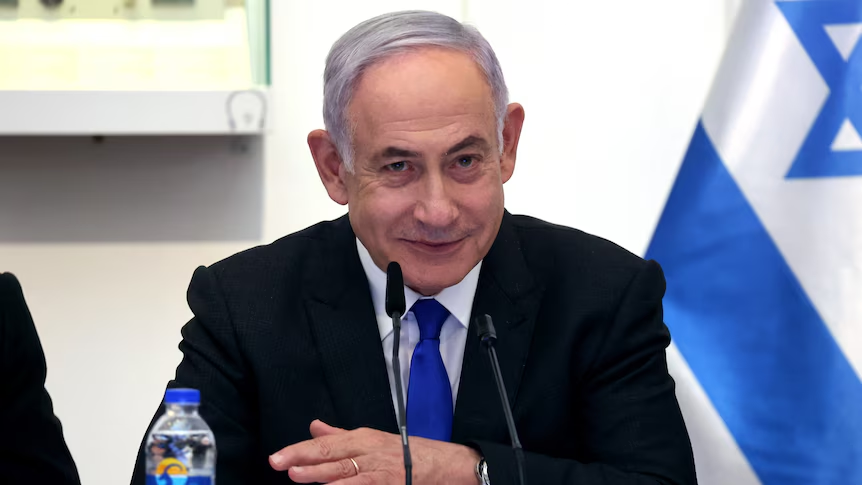
However, the main idea of the rumour is refuted by material that is accessible to the public. Netanyahu visited an impact site in Beersheba on March 6, according to the Israeli government’s main portal, and he made an official statement that was released by the Prime Minister’s Office on March 7.
His public activities have also been mentioned in independent sources in recent days, such as a phone conversation with Macron that was published by The Jerusalem Post on March 5 and reported by the Élysée.
Iranian claims on Netanyahu dismissed as ‘fake news’
Iranian allegations regarding Netanyahu’s location have already surfaced during the conflict.
According to the Times of Israel, Netanyahu’s staff rejected Iranian military assertions earlier in the conflict that Netanyahu’s destiny was “unclear” following a supposed strike as “fake news.” Following similar Iranian allegations, Xinhua also reported on March 2 that locals in the vicinity of Netanyahu’s office in Jerusalem noticed no indications of a missile impact.
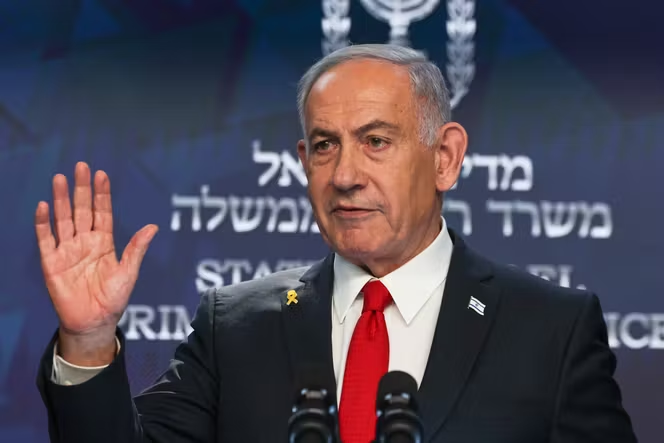
This larger context is important. Conspiracy theories can easily be sparked by the lack of a fresh video, an ambiguous official statement, or a change in a visiting dignitary’s schedule during swiftly evolving conflicts. It seems that Tasnim’s most recent report does just that—it provides hints rather than evidence.
In Israeli public life, official communications are frequently sent in text format, and security around high-ranking officials frequently changes during times of conflict. By itself, none of that constitutes proof of a major injury or assassination. As of Monday night, Tasnim’s theory has not been validated by any reliable public source.
Join Our Social Media Channels: