Nigeria is preparing for one of the most ambitious transformations in its education history. In classrooms from Abuja to remote communities in Borno, policymakers are working toward a bold target: ensuring that every school in the country can access digital learning tools and internet connectivity before the end of 2028.
The plan reflects a growing consensus among education leaders that the traditional chalkboard classroom alone is no longer enough. In a world increasingly driven by technology, Nigerian students must be able to learn, collaborate and compete in the digital economy.
Government officials, private sector partners, international donors and technology companies are now aligning around a shared vision. The objective is straightforward but massive in scale. Over the next few years, millions of students are expected to gain access to online educational platforms, digital devices and internet connectivity within their schools.
The effort also comes at a time when Nigeria faces a significant education gap. With one of the largest populations of school-age children in the world, the country is under pressure to modernise learning systems and expand access to quality education.

Why Nigeria Wants Every School Connected
Nigeria’s education sector has long struggled with infrastructure challenges. Many public schools lack libraries, laboratories and even stable electricity. In rural areas, access to textbooks and trained teachers can also be limited.
Digital learning is increasingly seen as a way to bridge these gaps. With internet connectivity, a student in a remote village can theoretically access the same educational resources as a learner in Lagos or London.
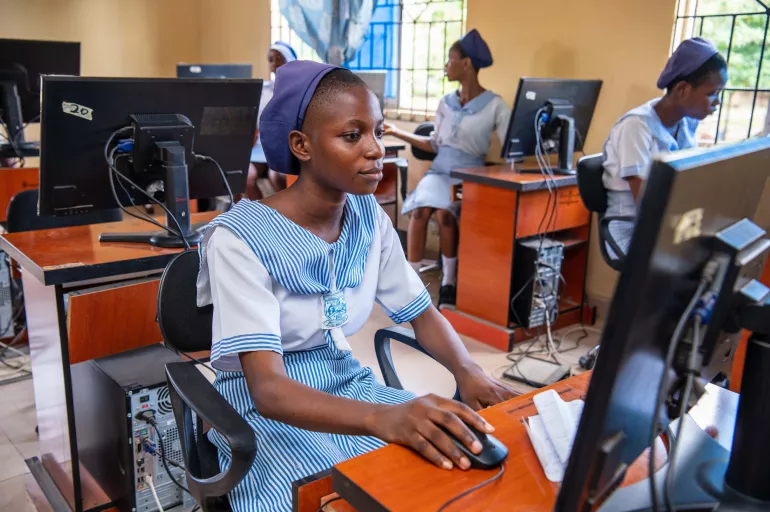
Education officials say the goal is not simply to place computers in classrooms but to reshape the entire learning environment. Teachers would be able to use digital content, interactive lessons and online assessments to improve how subjects are taught.
According to the Federal Ministry of Education, digital transformation is now central to preparing Nigerian students for a technology-driven global economy. Officials argue that continuing with outdated teaching methods would leave the country’s young population unprepared for modern jobs.
Nigeria is already experimenting with this shift. Some schools have begun adopting smart boards, online learning platforms and digital teaching tools. Pilot programmes are also training teachers to integrate technology into everyday classroom activities.
There are additional motivations behind the plan. Digital education systems can make it easier to track student performance, distribute learning materials and run national examinations.
The growing move toward computer-based testing is one example. The West African Examinations Council has been pushing for a full transition to computer-based exams, a policy that will require schools to invest heavily in digital infrastructure.
In many ways, connecting every school to the internet is becoming less of a luxury and more of a necessity.
Cost of a Nationwide Digital Education System
Building a fully connected education network for a country as large as Nigeria will require enormous investment.
Nigeria has tens of thousands of schools across its 36 states, many located in areas where internet connectivity and electricity remain unreliable. Creating digital classrooms in these environments involves several layers of cost.
First is connectivity. Schools must be connected to broadband internet, often through fibre networks, mobile data systems or satellite connections in remote locations.
Second is hardware. Computers, tablets, smart boards, servers and networking equipment must be installed in classrooms and administrative offices.
Third is teacher training. Technology alone cannot improve learning outcomes if teachers do not know how to use it effectively.
Government documents and education sector estimates suggest that the cost of equipping schools with digital infrastructure could run into hundreds of billions of naira over several years.
One example of investment already underway is a federal initiative that provides subsidised devices and free data access for teachers across the country. In the pilot phase, 8,000 teachers from different regions are receiving digital tools and connectivity support to improve classroom delivery.
Another area of spending involves digital learning platforms and online content libraries. These platforms allow students to access lessons, assignments and educational videos even outside the classroom.
Nigeria has also allocated funding in its national budget to support online education initiatives and technical training programmes in secondary schools.
While the total cost of putting every school online has not been publicly finalised, analysts agree that the project will require sustained funding from both government and private investors.
Key Partners Driving the Project
A project of this scale cannot be executed by the government alone. Nigeria’s digital education strategy relies heavily on partnerships with technology companies, development organisations and the private sector.
International organisations such as the World Bank and Mastercard Foundation have been involved in discussions around Nigeria’s national education technology strategy. These partnerships focus on building a digital learning ecosystem that supports both teachers and students.
Telecommunications companies are also expected to play a central role by providing connectivity solutions for schools.
In some initiatives, technology companies are contributing devices, digital platforms and internet services as part of long-term investment strategies in the education sector.
One notable partnership involves a collaboration between Nigerian private school operators and an American education technology company, Digital Learning Network. The initiative is designed to deploy artificial intelligence-driven learning platforms, laptops and high-speed internet access in schools.
The project, valued at about one billion dollars, aims to reach millions of students and may eventually expand nationwide.
Other partners are focusing on teacher development and digital literacy. Programmes run by Nigerian edtech firms and international development groups are already helping educators adapt to online teaching tools.
Private companies are also exploring ways to manufacture or assemble educational devices locally, which could reduce costs and create jobs in Nigeria’s technology sector.
Together, these partnerships form the backbone of Nigeria’s digital education ambitions.
Timeline and What Could Happen Before 2028
The target of connecting every school to the internet by 2028 may sound ambitious, but the roadmap is already unfolding in stages.
The first phase focuses on pilot programmes and infrastructure testing. This includes deploying digital devices to teachers, introducing smart classroom technology and launching online learning platforms.
The second phase involves scaling these programmes across more states. Schools that successfully adopt digital learning systems in the pilot stage will serve as models for nationwide implementation.
During this period, governments at the federal and state levels are expected to expand broadband access to underserved communities.
The final phase, expected closer to 2028, would see widespread integration of digital learning systems across Nigerian schools. By this stage, most classrooms would ideally have internet connectivity, digital teaching tools and access to national online learning platforms.

Education experts caution that achieving the goal will depend on several factors.
Reliable electricity remains a major challenge in many communities. Without a stable power supply, maintaining digital infrastructure in schools could prove difficult.
Teacher training is another key issue. Technology can only improve education if educators are comfortable using digital tools in their teaching methods.
There is also the question of long-term sustainability. Schools will need ongoing funding to maintain equipment, update software and upgrade connectivity.
Despite these concerns, many education stakeholders believe the benefits of digital transformation outweigh the challenges.
If successfully implemented, Nigeria’s plan could reshape learning for tens of millions of students and position the country as a leader in digital education across Africa.
For a nation with a rapidly growing youth population, the stakes are high. Connecting every school to the internet is not only about technology. It is about ensuring that the next generation of Nigerians has access to knowledge, skills and opportunities in an increasingly digital world.
Join Our Social Media Channels:
WhatsApp: NaijaEyes
Facebook: NaijaEyes
Twitter: NaijaEyes
Instagram: NaijaEyes
TikTok: NaijaEyes