The global semiconductor industry is still riding a powerful artificial intelligence wave, as fresh financial updates from chipmaking giants ASML and Taiwan Semiconductor Manufacturing Company (TSMC) point to sustained, even accelerating, investment in AI infrastructure. Despite rising questions from investors about whether the AI hype may be cooling, both companies are signalling the opposite: demand is not slowing down; it is expanding.
For countries like Nigeria and the wider African tech ecosystem, this matters because it reflects how deeply AI is reshaping global technology supply chains, from cloud computing to smartphones, data centres, and even future digital services that will eventually reach emerging markets.
This development is not just about chips. It is about the backbone of the modern digital economy.
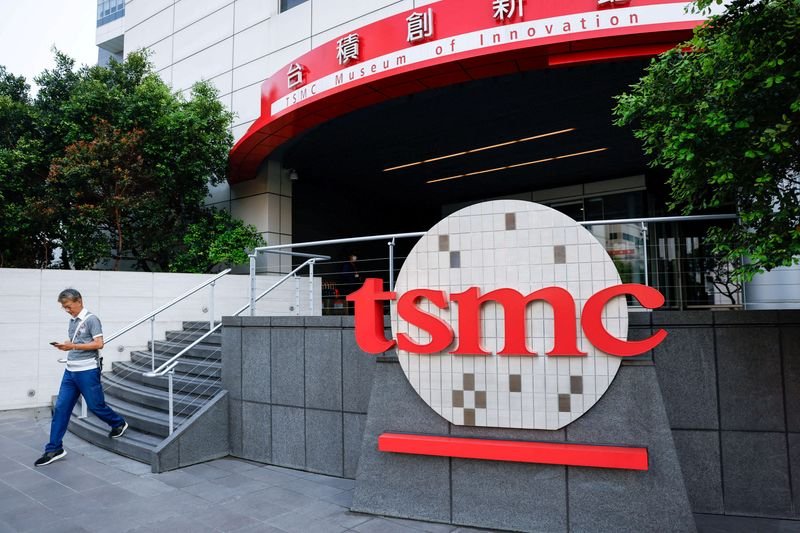
AI demand is still pushing chipmakers into record territory
The latest earnings outlooks from ASML and TSMC paint a clear picture: artificial intelligence remains the strongest driver of semiconductor growth in 2026.
TSMC, the world’s biggest contract chip manufacturer and a key supplier to companies like Nvidia and Apple, reported a major jump in profit and upgraded its revenue expectations. The company now expects strong double-digit growth for the year, with demand for advanced chips continuing to outstrip supply.
ASML, which produces the highly complex lithography machines needed to manufacture cutting-edge chips, also raised its sales forecast. The company said demand from chipmakers is still extremely strong, especially for equipment used in building AI processors.
Both firms are effectively sitting at opposite ends of the same pipeline. ASML supplies the machines, TSMC uses them to produce chips, and companies like Nvidia, Microsoft, Amazon and Meta buy those chips to power AI services.
Recent reports show major cloud computing companies are expected to spend hundreds of billions of dollars in 2026 alone on AI data centres, reinforcing the scale of the buildout already underway.

Big tech spending is shaping a global semiconductor expansion
At the centre of this boom is a massive spending cycle from global technology giants. Companies such as Microsoft, Amazon, Meta and Alphabet are continuing to expand their AI infrastructure at a record pace, building more data centres and increasing their reliance on high-performance chips.
This is feeding directly into demand for advanced semiconductor manufacturing. TSMC has already increased its capital spending plans to expand production capacity, especially for its most advanced chip technologies. These chips are essential for training large AI models and running complex cloud systems.
ASML is also benefiting from this surge. Its equipment is critical for producing the most advanced chips, particularly in the sub-5-nanometre range used for AI acceleration. The company’s leadership has noted that demand is actually exceeding supply in several key product lines.
The broader industry is responding with long-term capacity commitments. Chipmakers are locking in production deals years in advance, a sign that they expect AI demand to remain strong well beyond the short-term hype cycle.
This level of investment is unusual even by semiconductor industry standards, which are known for cycles of boom and slowdown. What stands out now is the consistency of demand across multiple quarters.
Capacity limits and supply chain pressure are becoming a challenge
While the growth story is strong, it is not without pressure points. The biggest constraint facing the industry right now is production capacity.
TSMC has acknowledged that it is operating under tight conditions, particularly for its most advanced manufacturing nodes. These are the facilities responsible for producing the chips used in AI accelerators and high-end computing systems.
To respond, the company is aggressively expanding its manufacturing footprint across Taiwan, the United States, and Japan. However, building new semiconductor fabs takes years, not months, meaning supply constraints are likely to persist in the near term.
ASML is also facing similar pressures. Its machines are extremely complex and take a long time to produce. Demand for its latest extreme ultraviolet lithography systems remains high, and customers are pushing to secure delivery slots well into the future.
There are also wider risks in the global supply chain. The semiconductor industry depends on a small number of specialised materials and suppliers, making it vulnerable to geopolitical tensions and logistics disruptions. Even with these risks, companies are continuing to invest heavily, suggesting confidence that long-term demand will outweigh short-term instability.
Industry analysts note that this imbalance between demand and supply is actually contributing to higher long-term pricing power for leading chipmakers.
What the AI chip boom means for the global economy and Africa
The ongoing expansion in semiconductor investment is not just a tech sector story. It is a global economic shift that will influence industries far beyond Silicon Valley.
For Africa, including Nigeria, the implications are both direct and indirect. As AI services expand globally, the cost and accessibility of digital tools, cloud platforms, and smart applications will increasingly depend on this semiconductor supply chain. Everything from fintech systems and mobile networks to education platforms and health technologies will be shaped by how efficiently these chips are produced.
There is also a long-term opportunity. As AI infrastructure spreads, demand for data centres, connectivity, digital skills, and software development will rise across emerging markets. Countries that position themselves early in AI-related services could benefit from new forms of outsourcing, remote work, and tech-driven economic growth.
However, the current situation also highlights a dependency gap. Most advanced chip manufacturing remains concentrated in a few countries and companies. Taiwan, in particular, plays a central role through TSMC, while Europe and the Netherlands dominate critical equipment production through ASML.
This concentration means that global AI progress is heavily tied to the stability and expansion decisions of a small group of firms. Any disruption in this chain could have ripple effects across global digital services, including in Africa, where reliance on imported technology infrastructure is already high.
Still, the message from current forecasts is clear. The AI buildout is not slowing. If anything, it is entering a more mature phase where spending is becoming structured, long-term, and deeply embedded in global economic planning.
For now, ASML and TSMC are not signalling caution. They are signalling acceleration. And that means the AI era is still very much in its expansion phase, not its peak.
Join Our Social Media Channels:
WhatsApp: NaijaEyes
Facebook: NaijaEyes
Twitter: NaijaEyes
Instagram: NaijaEyes
TikTok: NaijaEyes