Nigeria’s growing ambition to become a serious player in artificial intelligence took centre stage again as UNICCON Group unveiled more of its indigenous AI solutions built specifically for African realities, languages and industries.
The Abuja-based technology company has continued to attract attention across the continent for its investment in robotics, AI systems, speech technology and digital infrastructure that reflect African identities and local needs. At a time when conversations around artificial intelligence are largely dominated by foreign companies, UNICCON is positioning itself as one of the Nigerian firms determined to prove that Africa can also build globally relevant technology.
The company’s growing portfolio includes humanoid robotics, multilingual AI tools, enterprise software, drone technology and digital learning platforms. Industry observers say the latest showcase represents more than just another corporate unveiling. It reflects the increasing confidence among African tech founders that local innovation can compete on a global level while solving problems unique to the continent.
For many attendees and technology stakeholders who followed the unveiling, one thing stood out clearly. The focus was not simply on importing global AI trends into Africa. Instead, the company emphasised building solutions around African cultures, accents, languages and institutions.
That direction matters in a continent where many AI systems still struggle to properly recognise African speech patterns, local names and indigenous languages.
According to information published by the company, its AI infrastructure supports several African language applications, including Hausa, Yoruba, Nigerian Pidgin and Nigeria-accented English.
Technology analysts say this approach could help close long-standing gaps in AI representation across Africa, especially as concerns continue to grow about global artificial intelligence systems being heavily biased towards Western datasets and cultures. Research on African AI ecosystems has repeatedly highlighted the importance of indigenous innovation in ensuring local relevance and inclusion.
Beyond the technical capabilities, the showcase also carried a deeper message about ownership, identity and economic opportunity. Nigerian startups and technology firms are increasingly under pressure to create solutions that not only serve local users but also retain African intellectual property within the continent.
Industry watchers believe this is one of the reasons conversations around indigenous AI are gaining momentum in Nigeria’s tech ecosystem.
Omeife and the Push to Build African AI for African Realities
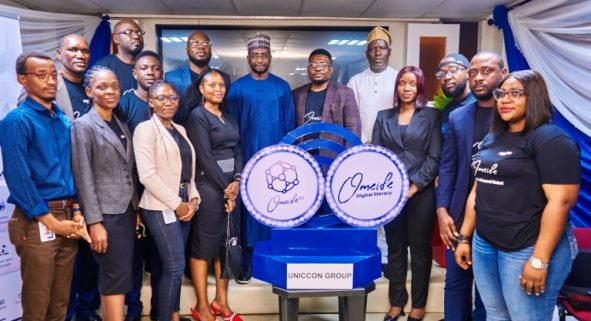
Perhaps the most recognised symbol of UNICCON’s ambitions remains Omeife Technologies, the company behind what has widely been described as Africa’s first humanoid robot.
Standing at about six feet tall, Omeife was designed not only as a technological experiment but also as a representation of African identity in advanced robotics. The robot can reportedly communicate in multiple African and international languages while interacting with users through speech recognition, facial analysis and behavioural intelligence systems.
Since its unveiling, Omeife has become one of the most talked-about technology products to emerge from Nigeria’s AI space. The project drew national attention when former Nigerian Vice President Yemi Osinbajo publicly praised the innovation during its launch in Abuja.
For many young Nigerian developers and engineering students, the robot became symbolic of what local talent could achieve despite infrastructure challenges, limited research funding and inconsistent government support.
But beyond the headlines and public fascination, experts say the real significance lies in the underlying AI ecosystem being built around the project.
UNICCON says its systems are being developed for practical applications across education, healthcare, customer service, enterprise management and public sector operations.
The company has also expanded into AI-powered speech and language APIs aimed at improving communication technology across African markets. These systems are expected to support automatic speech recognition, language translation and speech synthesis tools tailored to African users.
In practical terms, this could eventually improve digital accessibility for millions of Africans who interact more comfortably in local languages than in standard Western English.
Experts in African technology development argue that these kinds of investments are becoming increasingly important as artificial intelligence reshapes education, business and governance globally. Studies examining AI adoption across Africa have warned that without local participation, the continent risks becoming only a consumer of foreign technologies instead of an active creator.
That concern has become even more urgent following the rapid rise of generative AI systems globally.
The Back Story Behind Nigeria’s Indigenous AI Movement
Nigeria’s interest in indigenous artificial intelligence did not emerge overnight. For years, African technology leaders have raised concerns about how global AI systems often fail to adequately represent African languages, cultures and realities.
Many popular AI platforms were trained primarily on Western datasets, leaving major gaps when interacting with African accents, names, local histories and indigenous communication styles.
Researchers have repeatedly warned that this imbalance could deepen digital inequality if African countries fail to invest in local AI development.
At the same time, Nigeria’s rapidly growing youth population and expanding startup ecosystem created fertile ground for AI experimentation. Over the last decade, local startups began exploring ways to apply machine learning and automation in sectors such as fintech, agriculture, healthcare, logistics and education.
UNICCON emerged during this period as one of the firms aggressively pushing beyond software into advanced robotics and AI infrastructure.
Founded in Abuja, the company gradually expanded into multiple sectors, including telemedicine, cybersecurity, enterprise systems, drone technology and digital education.
Its rise also coincided with Nigeria’s broader digital economy ambitions. Government agencies and private investors increasingly began encouraging local technology development as a strategy for economic diversification beyond oil.
That shift helped create a stronger interest in homegrown AI solutions capable of addressing local challenges.
The company’s visibility grew significantly after the launch of Omeife in 2022 and later through the release of AI and digital literacy applications designed for Nigerian users.
Since then, UNICCON has continued expanding its influence through partnerships, training programmes and technology demonstrations both within and outside Nigeria.
Its participation in international technology events also helped position the company as part of a wider African movement advocating for stronger local ownership of emerging technologies.
Why Indigenous AI Could Shape Nigeria’s Digital Future
The growing attention around indigenous AI reflects larger questions about Africa’s place in the future global economy.
Artificial intelligence is expected to influence nearly every major industry over the coming years, from healthcare and finance to education, agriculture and security. Countries that actively build AI infrastructure may gain significant economic advantages, while those that depend entirely on imported systems could struggle with digital dependency.
For Nigeria, the stakes are especially high.
With one of Africa’s largest youth populations and a fast-expanding digital economy, the country has both the talent and market size to become a serious technology hub. However, experts say long-term success will depend on sustained investment in local research, infrastructure, education and innovation ecosystems.
This is where companies like UNICCON are drawing attention.
The company’s efforts to build African-focused AI products are increasingly being viewed as part of a broader attempt to ensure Africa has a voice in shaping the future of artificial intelligence instead of merely adapting to decisions made elsewhere.
Industry analysts also point to the economic implications. Indigenous AI development could create jobs for software engineers, robotics specialists, data scientists, linguists and digital educators across the continent.
It may also improve digital inclusion by making technology more accessible to people who communicate primarily in local languages.
UNICCON’s continued expansion into robotics, enterprise solutions and AI infrastructure reflects how quickly the African technology landscape is evolving.
Although challenges around funding, electricity, internet access and policy consistency still remain, many stakeholders believe the momentum behind indigenous African AI is unlikely to slow down.
For young Nigerian developers watching these innovations emerge from within the continent, the message is becoming clearer. Africa is no longer waiting to be invited into the future of artificial intelligence. Increasingly, it wants to help build that future itself.