The 2026 Unified Tertiary Matriculation Examination has commenced across Nigeria on a steady and encouraging note, with early reports from the Federal Capital Territory pointing to a well-coordinated and incident-free start. At a time when millions of candidates are competing for limited admission slots into tertiary institutions, the smooth rollout offers a reassuring signal about the growing efficiency of Nigeria’s computer-based examination system.
Across the country, over 2.2 million candidates are expected to sit for this year’s examination, which is being conducted by the Joint Admissions and Matriculation Board. The exercise is scheduled to run for several days, with candidates distributed across multiple sessions to reduce congestion and maintain order at accredited centres.
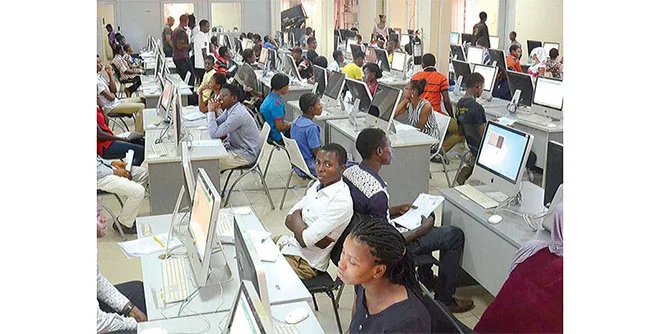
Orderly commencement at the FCT CBT centre
At one of the monitored centres in Byazhin, Kubwa, within the Bwari Area Council, the atmosphere on the first day reflected careful planning and disciplined execution. Candidates arrived early, officials were on the ground, and the screening process began without unnecessary delays.
Biometric verification, which has become a central feature of the examination process, reportedly proceeded without any technical glitches during the morning session. Out of the candidates scheduled for the first batch, a large majority were successfully screened and admitted into the examination hall, demonstrating both preparedness on the part of the candidates and operational readiness by the centre.
Officials at the centre confirmed that the process was smooth from start to finish. Candidates were checked in systematically, and the examination commenced exactly at the scheduled time. This level of punctuality, often a challenge in previous years, suggests that lessons from past exercises are being applied effectively.
Equally important was the level of compliance observed among candidates. There were no reports of misconduct, and examination rules were clearly communicated before the test began. The absence of infractions during the first session indicates that awareness campaigns and stricter enforcement measures are beginning to yield results.
JAMB strengthens its structure to manage a large candidate volume
Managing an examination of this scale requires not just planning but adaptability. With over two million candidates participating, the Joint Admissions and Matriculation Board has structured the examination into multiple daily sessions to ensure that centres operate within capacity while maintaining efficiency.
This staggered approach allows for better crowd control and reduces the risk of system overload, which has historically been a concern in large-scale computer-based testing environments. It also ensures that candidates can be properly screened and verified before entering the examination hall.
In addition, the board has deployed enhanced technological systems, including biometric authentication and real-time monitoring tools, to safeguard the integrity of the examination. These measures are designed to eliminate impersonation and reduce examination malpractice to the barest minimum.
The emphasis on technology reflects a broader shift in Nigeria’s education assessment system, where digital solutions are increasingly being used to improve transparency, speed, and accountability. While challenges remain in some areas, especially in rural locations, the improvements seen in centres like the one in the FCT highlight the potential of these reforms.

Adjustments improve candidate experience and safety
One notable change introduced for the 2026 exercise is the adjustment of the arrival time for candidates scheduled for the first session. Previously, candidates were required to arrive as early as 6:30 in the morning, a practice that drew criticism due to safety and logistical concerns.
For this year’s examination, the arrival time has been slightly adjusted to allow candidates more flexibility while still ensuring that all pre-examination procedures are completed before the test begins. The examination itself still starts at 8:30 in the morning, maintaining consistency in scheduling.
This adjustment, though seemingly minor, reflects a growing responsiveness by the examination body to feedback from candidates and parents. Early morning travel, especially for candidates coming from distant locations, has long been a concern, and the new timing is expected to ease some of that pressure.
Beyond timing, candidates were also advised ahead of the examination to print their slips early and familiarise themselves with their assigned centres. This proactive communication helped reduce confusion on the day of the exam and contributed to the orderly conduct observed at the FCT centre.
Zero tolerance for malpractice remains central
Despite the smooth start, authorities have reiterated that the integrity of the examination remains a top priority. Strict guidelines have been put in place regarding prohibited items, and candidates are subject to thorough checks before being allowed into the examination hall.
The board has maintained a zero-tolerance stance on examination malpractice, warning that any candidate found violating the rules will face serious consequences. This includes possible disqualification and further sanctions where necessary.
The deployment of biometric verification is a key part of this enforcement strategy. By linking each candidate to their unique biological identity, the system makes it extremely difficult for impersonation to occur. Combined with real-time monitoring, it creates a robust framework for maintaining the credibility of the examination.
This approach is particularly important given the high stakes involved. For many candidates, the UTME represents a critical step towards higher education and future career opportunities. Ensuring that the process is fair and transparent is therefore essential.
A positive signal for Nigeria’s examination system
The smooth commencement of the 2026 UTME in the Federal Capital Territory offers a glimpse into what is possible when planning, technology, and compliance come together effectively. While it is still early in the examination cycle, the initial reports are encouraging.
Across Nigeria, the UTME remains one of the most significant academic exercises, serving as the gateway to universities, polytechnics, and colleges of education. Its successful conduct has far-reaching implications for the education sector and the country at large.
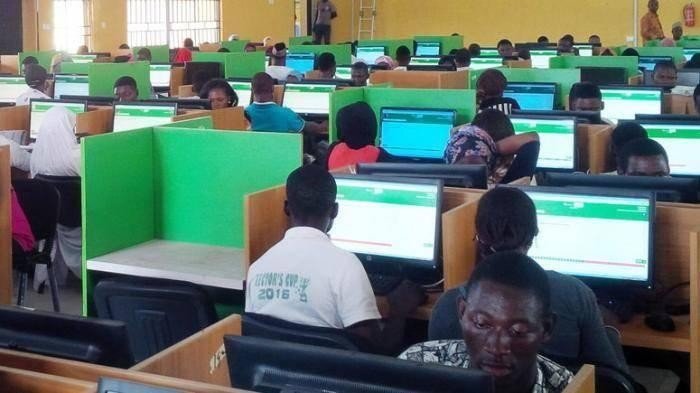
The early success recorded in the FCT suggests that ongoing reforms within the system are beginning to take root. From improved logistics to enhanced technological integration, there is clear evidence of progress.
However, sustaining this momentum will require consistency across all centres nationwide. Challenges such as network stability, power supply, and candidate compliance must continue to be addressed to ensure that the examination runs smoothly from start to finish.
For now, candidates, parents, and stakeholders can take some comfort in the fact that the exercise has started on a positive note. If the current trend continues, the 2026 UTME could set a new benchmark for efficiency and credibility in Nigeria’s examination landscape.
Join Our Social Media Channels:
WhatsApp: NaijaEyes
Facebook: NaijaEyes
Twitter: NaijaEyes
Instagram: NaijaEyes
TikTok: NaijaEyes