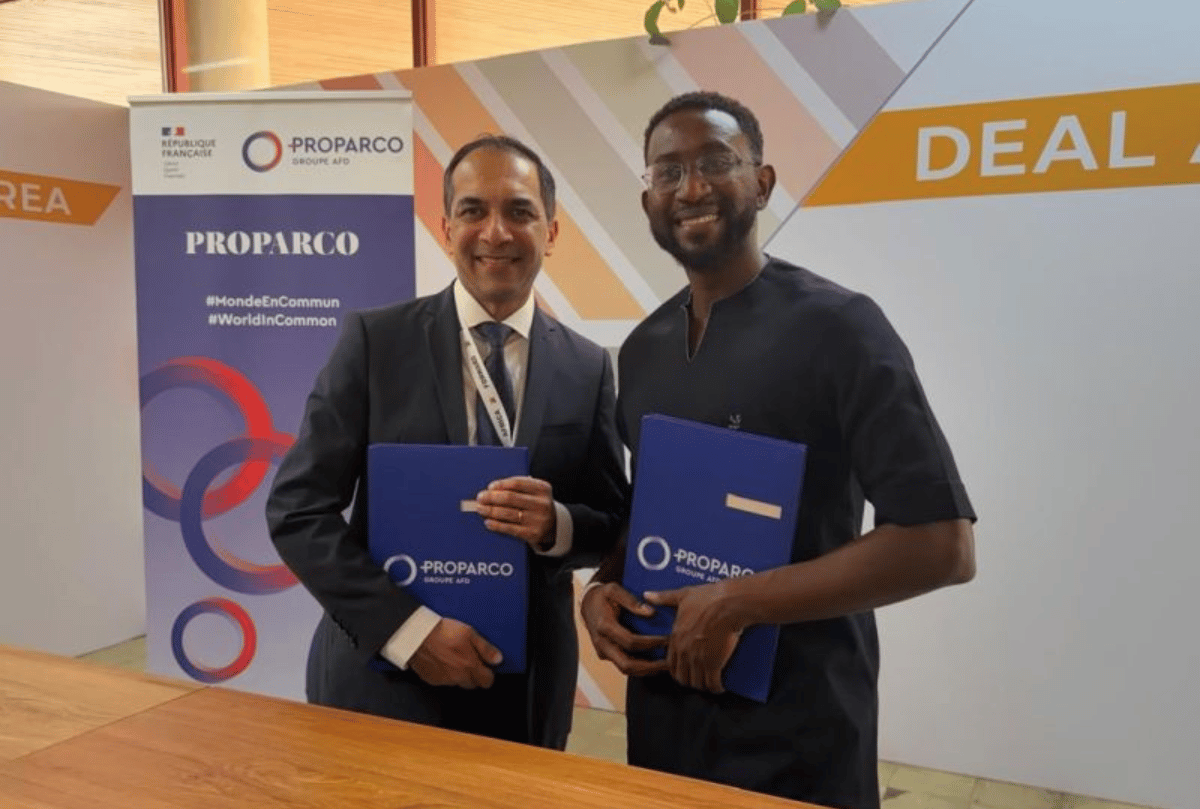

Africa’s remittance and cross-border payments space has received a significant lift after the French development finance institution, Proparco, announced a new investment in Cauridor, a fast-growing fintech building payment infrastructure across the continent. The deal, revealed during the Africa Forward Summit in Nairobi, signals renewed global confidence in Africa’s digital financial rails at a time when remittances remain a lifeline for millions of households.
Cauridor, founded in 2022 by Guinean entrepreneurs Oumar Barry and Abdoulaye Bah, is working to solve one of Africa’s most persistent financial challenges: how to make money transfers across borders cheaper, faster, and more reliable. The company operates a backend infrastructure that connects global money transfer operators with African payment systems, including mobile money providers, banks, and cash networks.
Proparco’s participation comes through a USD 2 million equity investment, which is part of Cauridor’s broader Series A funding round. Other investors in the round include global and African venture capital firms focused on fintech and infrastructure growth. According to Proparco, the investment aligns with its long-term mandate of supporting inclusive digital financial systems across emerging markets.
For many observers, the deal is less about the size of the cheque and more about what it represents: a push to modernise Africa’s fragmented remittance systems and strengthen the digital backbone that supports cross-border commerce, migration flows, and household income stability.

Back story: why Africa’s remittance infrastructure matters more than ever
Remittances are one of Africa’s most stable financial inflows, often exceeding foreign direct investment in several countries. These inflows support everything from daily household expenses to education and small business financing. Yet, despite their importance, sending money into and within Africa remains expensive and inefficient compared to global averages.
In many corridors, users still face high fees, delayed settlements, and limited interoperability between banks, mobile wallets, and international money transfer operators. This friction has created a strong demand for infrastructure companies that sit behind the scenes and connect these disconnected systems.
Cauridor’s model focuses exactly on this gap. Instead of competing as a consumer-facing app, it builds the rails that allow established players like Western Union, MoneyGram, RIA, Sendwave, and Taptap Send to integrate more effectively with African payout networks.
The broader financial context also matters. Across Africa, development finance institutions are increasingly stepping in to bridge funding gaps in infrastructure, including digital financial systems, energy, and transport. These institutions often provide early-stage capital to startups that are too infrastructure-heavy or capital-intensive for traditional venture capital alone.
In Cauridor’s case, the new funding brings its total raised capital to about USD 13 million, giving it more runway to expand operations and strengthen its technical infrastructure. The company plans to use the funds to grow its engineering and operations teams while accelerating expansion across West and Central Africa.
Inside the Proparco and Cauridor partnership
The timing of Proparco’s investment is strategic. Africa’s digital payments ecosystem is undergoing rapid transformation, driven by mobile money adoption, fintech innovation, and growing demand for cross-border financial services.
Proparco, which operates as part of the wider French development finance ecosystem, has been steadily increasing its exposure to African fintech and infrastructure projects. Its focus is on building systems that are not only profitable but also inclusive, scalable, and capable of serving underserved populations.
Cauridor fits neatly into that agenda. The company is already active across dozens of African markets and is building what it describes as a unified payment infrastructure layer for the continent. This means enabling money to move seamlessly from international senders into local payment systems without multiple intermediaries slowing the process.
A senior representative from Proparco described the investment as part of its broader mission to support digital transformation and financial inclusion in emerging economies. The emphasis, according to the institution, is on building infrastructure that reduces cost and improves access to financial services for individuals and businesses.
For Cauridor’s leadership, the backing is both financial and strategic. The company says it will use the partnership to deepen its infrastructure capabilities and expand into additional markets where cross-border payment inefficiencies remain a major barrier to economic participation.
What this means for Africa’s fintech and remittance future
The Proparco-backed investment highlights a larger shift happening across Africa’s fintech landscape. The focus is moving away from only consumer-facing apps toward foundational infrastructure that powers entire ecosystems.
This is important because the long-term scalability of digital finance in Africa depends not just on mobile wallets or payment apps, but on the invisible systems that connect them. Without these backend rails, cross-border transactions remain fragmented, expensive, and slow.
Cauridor’s expansion strategy points toward a future where sending money into Africa is as seamless as domestic transfers in more mature markets. If successful, this could significantly reduce transaction costs for migrants sending money home, improve liquidity for small businesses engaged in cross-border trade, and strengthen financial inclusion for underserved communities.
At a broader level, investments like this also reflect growing interest from development finance institutions in supporting digital infrastructure as a core pillar of economic growth. Alongside sectors like energy and transport, financial infrastructure is now being treated as essential for long-term development outcomes.
Africa’s remittance ecosystem is still evolving, but deals like this suggest that the next phase of growth will be driven by infrastructure builders rather than just payment apps. For fintech companies operating in the region, the message is clear: the future belongs to those building the rails, not just the trains running on them.
Join Our Social Media Channels:
WhatsApp: NaijaEyes
Facebook: NaijaEyes
Twitter: NaijaEyes
Instagram: NaijaEyes
TikTok: NaijaEyes