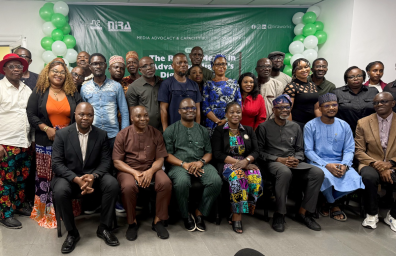
Nigeria’s internet governance space has renewed calls for stronger adoption of the .ng domain, with the country’s internet registry warning that continued dependence on foreign web addresses is draining value from the local digital economy and weakening Nigeria’s digital identity. The message, delivered in Lagos during a media engagement session, highlights a growing concern among stakeholders that Nigeria is building its digital future on external infrastructure while losing economic benefits in the process.
This development comes at a time when Nigeria’s digital economy continues to expand rapidly, driven by increased internet penetration, mobile connectivity, and the growth of online businesses. Yet, beneath this progress lies a structural issue that experts now describe as “digital leakage,” where revenue, control, and data generated within the country flow outward to foreign platforms.
Nigeria’s .ng Domain and the Battle for Digital Identity
At the centre of the conversation is the .ng domain, Nigeria’s official country code top-level domain managed by the Nigeria Internet Registration Association. The registry has consistently promoted .ng as a national digital asset that represents Nigerian businesses, institutions, and individuals online.
According to the registry, many organisations still prefer generic domains such as .com or .org, often hosted and registered through foreign providers. While these options offer global familiarity, they also mean that significant portions of payments for domain registration, hosting, and related services leave Nigeria’s economy.
Industry data shows that despite steady growth in .ng adoption, the number of registered domains remains relatively small compared to Nigeria’s population and expanding internet user base. This gap, stakeholders argue, reflects a missed opportunity for economic retention and digital sovereignty.
Digital Leakage and the Economic Concern Behind It
The term digital leakage refers to the gradual loss of economic value to external digital infrastructure. In Nigeria’s case, this includes payments made in foreign currency for domain names, hosting services, and platform dependencies that could otherwise be handled locally.
Stakeholders argue that when Nigerian businesses register foreign domains, they are essentially contributing to capital outflow. Over time, these seemingly small transactions accumulate into significant financial losses for the country’s digital ecosystem.
Beyond direct costs, there is also concern about dependency. With foreign domains, legal disputes, cybersecurity issues, and data governance often fall under external jurisdictions. This can complicate regulatory oversight and reduce national control over critical digital assets.
Experts say the issue is not just technical but economic, pointing out that stronger adoption of .ng could help retain revenue within the country, support local infrastructure providers, and stimulate job creation in the ICT sector.
Building Trust, Awareness and Media Responsibility
A major theme emerging from the registry’s campaign is the role of awareness. Many Nigerian businesses, especially small and medium enterprises, still view domain names as a secondary technical detail rather than a strategic business asset.
The registry believes that changing this perception is essential for increasing adoption. It has therefore turned to the media as a key partner in shaping public understanding. Journalists are being encouraged to consistently highlight the importance of local digital identity in business, governance, and national development conversations.
According to stakeholders, increased media coverage could help reposition .ng as not just a web address but a symbol of trust, accountability, and national pride. This is particularly important in a digital environment where cybersecurity concerns and online fraud continue to grow.
The broader objective is to shift how businesses think about their online presence, encouraging them to see domain choice as a long-term strategic decision rather than a one-time technical setup.
Nigeria’s Digital Future and the Push for Sovereignty
The push for wider .ng adoption is also tied to a larger continental discussion around digital sovereignty. Across Africa, governments and regulators are increasingly focused on strengthening control over data, infrastructure, and digital systems.
For Nigeria, the argument is that a stronger local domain ecosystem can help anchor digital activity within national boundaries. This includes keeping financial value within the economy, improving cybersecurity response capacity, and reinforcing Nigeria’s identity in global digital spaces.
However, challenges remain. Many businesses still prefer global domains due to perceived prestige, ease of international recognition, and established trust among global audiences. Cost, awareness, and infrastructure reliability also influence decision-making.
Despite these challenges, the registry maintains that progress has been steady. Recent years have seen increased registration activity, especially among small and medium enterprises, as well as renewed policy support for local digital adoption.
Still, experts agree that adoption levels remain far below Nigeria’s potential, given its large internet population and rapidly growing tech ecosystem.
The long-term goal, stakeholders say, is to ensure that Nigeria’s digital identity is not just active online, but also economically beneficial to the country.
As discussions continue, one message stands out clearly from the registry’s campaign: Nigeria’s digital future will not only depend on innovation and connectivity, but also on the choices made today about ownership, identity, and where digital value truly resides.
Join Our Social Media Channels:
WhatsApp: NaijaEyes
Facebook: NaijaEyes
Twitter: NaijaEyes
Instagram: NaijaEyes
TikTok: NaijaEyes